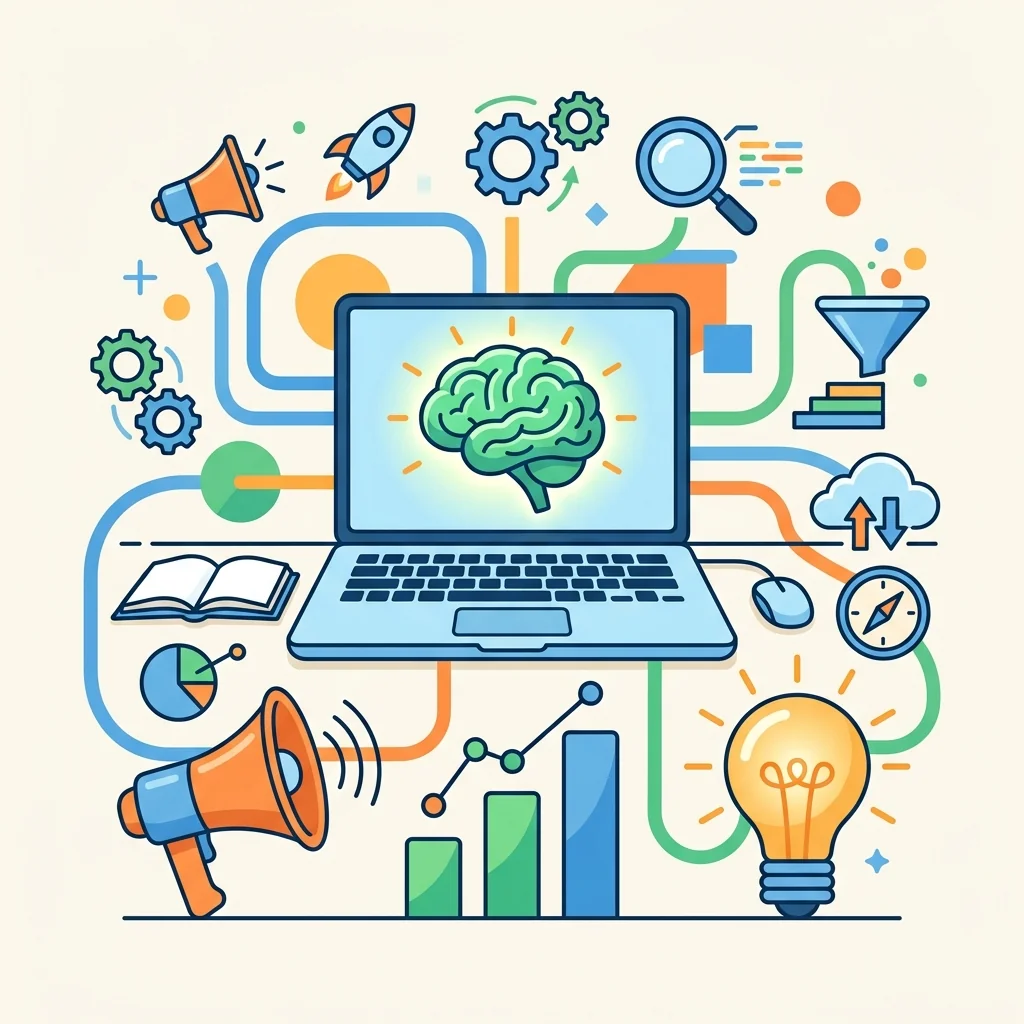
Understanding AI Prompts for Marketing
AI prompts have revolutionized how marketing teams approach creative tasks, offering a structured way to generate fresh ideas and solutions. By utilizing cluster prompts, teams can explore various angles and concepts related to their marketing campaigns. For instance, a cluster prompt about 'Strategies for Using AI Prompts for Marketing Teams' might include subtopics like audience engagement, content creation, or campaign planning. The key lies in defining clear, detailed prompts that align with the team’s objectives. This method not only saves time but also encourages marketers to think outside the box, resulting in innovative strategies that resonate with their target audience.
Marketing teams aiming to boost creativity with AI should integrate prompt-based strategies into their workflow systematically. Start by identifying specific challenges or opportunities within your campaigns, then craft targeted prompts to address these areas. For example, if the goal is to enhance customer engagement, a prompt could be: 'Generate five creative post ideas for increasing user interaction on social media.' Such focused questions guide AI tools to produce actionable results. Consistently refining these prompts based on feedback ensures continuous improvement. Additionally, collaborating with team members to review and iterate on AI-generated suggestions fosters a blend of human creativity and technological efficiency, ultimately driving better marketing outcomes.
Benefits of AI Prompts in Marketing
AI prompts offer marketing teams a structured way to enhance creativity and streamline their workflows. By providing clear guidance or starting points, these prompts can help generate new ideas, refine messaging strategies, and even uncover untapped opportunities. For example, using AI prompts to brainstorm campaign slogans or social media content allows teams to explore diverse angles while maintaining focus on brand voice. Additionally, AI can analyze past successful campaigns and suggest improvements or variations tailored to specific target audiences. This approach not only saves time but also ensures that marketing efforts remain fresh and relevant. Ultimately, integrating AI prompts empowers teams to create impactful, data-driven strategies without compromising their creative instincts.
Implementing AI prompts also encourages collaboration and consistency within marketing teams. By clustering prompts around specific goals or themes, teams can align their efforts and maintain a unified approach across different channels. For instance, prompts designed for email campaigns can ensure tone consistency while tailoring messages to different audience segments. The adaptability of AI-powered tools allows teams to address challenges such as writer’s block or tight deadlines effectively. Furthermore, AI prompts provide a learning opportunity by showcasing best practices and innovative ideas from global marketing trends. This fosters not only individual growth but also collective improvement within the team. As a result, marketing teams can achieve higher productivity and deliver more engaging, targeted content to their audiences.
Crafting Effective AI Prompts
Crafting effective AI prompts requires a deep understanding of the marketing team's goals and target audience. To create impactful prompts, start by identifying the specific task or challenge your team is facing. For example, if the goal is to generate creative social media content, the prompt should clearly outline the desired tone, format, and audience preferences. Structured prompts that include relevant keywords, such as 'generate innovative Instagram captions for eco-friendly products,' can guide the AI to produce results aligned with your objectives. Additionally, consider using a combination of broad and detailed prompts to explore diverse creative angles while maintaining focus on your marketing strategy.
For marketing teams aiming to boost creativity with AI, leveraging clustering techniques can be highly beneficial. Clustering involves grouping related prompts to explore varying aspects of a campaign, such as branding, messaging, and design. This strategy ensures a comprehensive approach, allowing your team to compare AI-generated outputs across different dimensions. For instance, one cluster might focus on email subject lines, while another targets engaging blog post ideas. By organizing prompts into clusters, marketing teams can streamline their workflow and ensure consistency across campaigns. Moreover, reviewing and refining AI outputs collaboratively fosters creativity and ensures the final content aligns with the brand's voice and objectives.
Collaborating with Teams Using AI Tools
Collaborating with teams using AI tools can significantly enhance creativity and streamline workflows, especially for marketing teams. By leveraging strategies for using AI prompts for marketing teams, organizations can generate fresh ideas and quickly iterate on campaigns. AI tools are particularly useful for brainstorming sessions, where they can provide clusters of prompts tailored to specific goals, such as creating engaging social media content or drafting compelling email campaigns. These tools can help marketing teams identify patterns, explore new perspectives, and avoid creative blocks, all while ensuring alignment with brand messaging. Teams can also use AI to analyze audience insights and adapt strategies to meet their needs more effectively.
To maximize the benefits of AI tools, marketing teams should focus on clear communication and collaboration. Setting defined objectives and clustering prompts around these goals ensures the AI generates relevant outputs. For example, teams could use AI to suggest blog topics, outline campaign strategies, or refine ad copy. Regularly reviewing and refining the AI-generated content collaboratively helps maintain a high standard of creativity and relevance. Additionally, marketing teams should explore how AI can automate repetitive tasks, allowing team members to dedicate more time to strategic thinking. By integrating AI tools thoughtfully, marketing teams can foster a more innovative and adaptive approach to their campaigns, driving better results overall.
Evaluating and Refining Prompt Strategies
Using AI prompts effectively can significantly enhance the creative processes of marketing teams. By leveraging AI-driven strategies for generating ideas, teams can explore diverse perspectives and produce innovative campaigns. For instance, clustering prompts around specific themes allows marketers to generate a wide range of creative solutions tailored to their target audience. This approach ensures that the generated content remains relevant and engaging. Additionally, crafting prompts with clear intent, such as focusing on specific campaigns, product launches, or audience segments, can improve the quality of the AI-generated ideas. These techniques not only save time but also help unlock new creative potentials, making AI a valuable tool for modern marketing efforts.
To refine the use of AI prompts, marketing teams should continuously evaluate and adapt their strategies. Reviewing generated content critically and iterating on the prompts can lead to more refined and targeted outputs. Context-specific prompts, for example, can help teams address unique challenges or opportunities in their campaigns. Furthermore, incorporating the team’s feedback into the AI’s learning process ensures that the generated prompts align better with the brand’s voice and goals. Regular experimentation with different prompt structures and keywords also encourages innovation. By fostering a collaborative environment where AI is a creative partner, marketing teams can maximize its potential to deliver impactful and memorable campaigns.