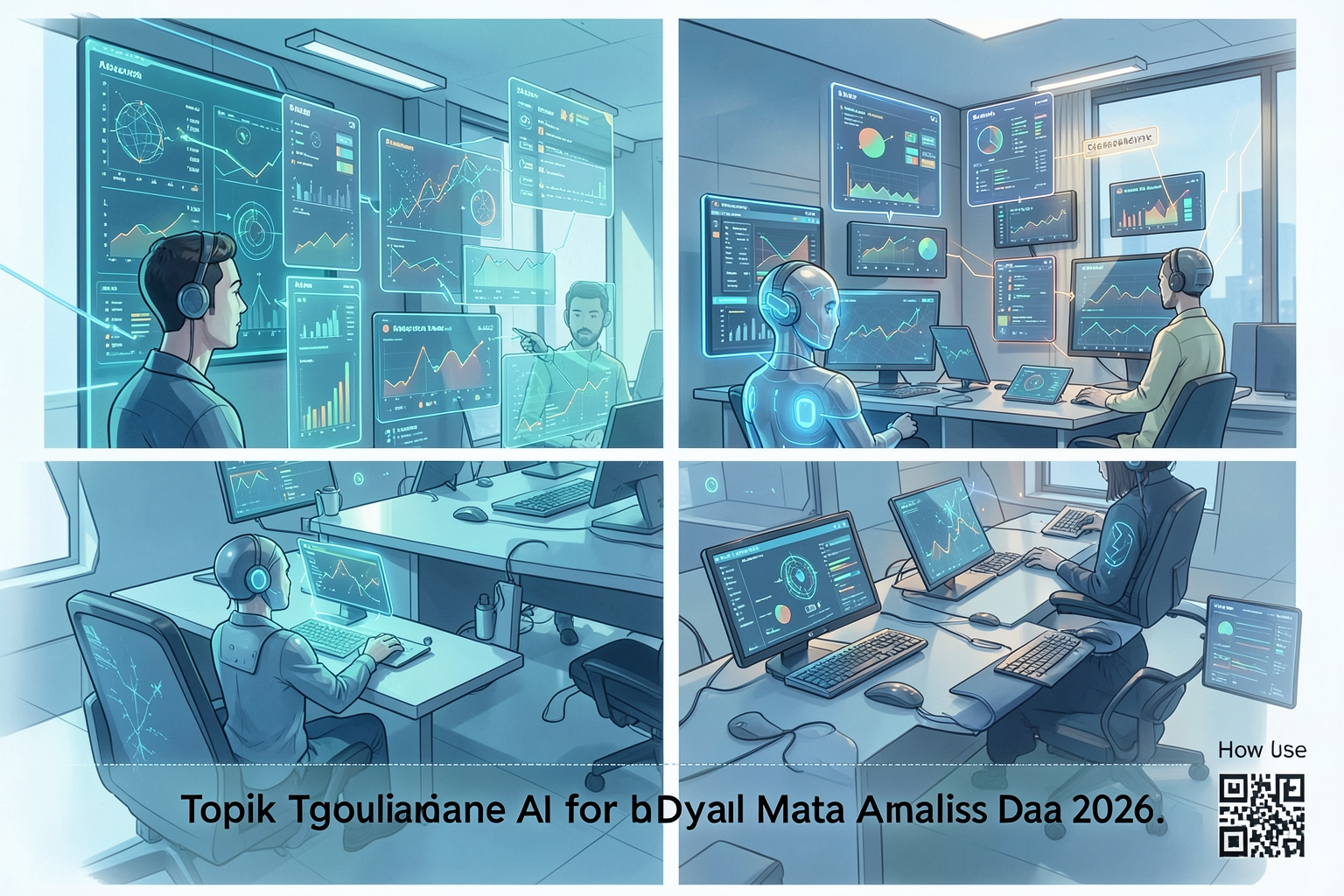
Introduction to AI in Data Analysis
Artificial Intelligence (AI) has become an essential tool for data analysts and small to medium-sized businesses aiming to optimize their processes. By 2026, the use of AI in data analysis is expected to grow even more, with advanced AI tools becoming more accessible and user-friendly. These tools can help businesses identify trends, predict outcomes, and automate repetitive tasks, enabling them to make data-driven decisions efficiently. For data analysts, understanding how to use AI effectively is critical. Learning to integrate AI-powered software, such as machine learning platforms and predictive analytics tools, can significantly enhance their ability to deliver actionable insights. This evolution reduces manual workload and enhances precision, driving better business outcomes.
The process of using AI for data analysis starts with selecting the right tools tailored to the needs of small to medium-sized businesses. Tools like automated data visualization software and natural language processing algorithms can simplify complex datasets, making them easier to interpret. For a successful implementation by 2026, businesses should focus on training their teams to use AI tools effectively. Tutorials, hands-on training, and continuous learning programs can bridge the gap between technology and its practical application. Additionally, fostering collaboration between data analysts and AI systems ensures that the insights generated align with business goals. By leveraging AI responsibly, businesses can unlock new growth opportunities and maintain a competitive edge in their industries.
Why 2026 Is a Crucial Year for AI Adoption
The year 2026 is projected to be a pivotal moment for artificial intelligence (AI) adoption, especially in the realm of data analysis. Small-to-medium businesses (SMBs) and data analysts are increasingly seeking ways to integrate AI tools into their workflows. By 2026, advancements in AI technology are expected to result in more accessible and cost-effective solutions. These tools will empower businesses to extract meaningful insights from vast datasets, enhancing decision-making processes. Furthermore, the competitive market will likely push AI developers to create user-friendly platforms tailored for non-technical users. This evolution will open doors for SMBs to leverage AI without requiring extensive technical expertise, enabling them to stay competitive in a data-driven economy.
For data analysts and SMBs, understanding how to use AI for data analysis in 2026 will be essential. The first step involves identifying AI tools specifically designed for data analytics, such as predictive modeling, trend detection, or anomaly identification. Tutorials and training resources will be critical in bridging knowledge gaps and ensuring effective tool implementation. Additionally, businesses must prioritize data quality and security to maximize AI's potential. By fostering a culture of continuous learning and experimentation with AI tools, SMBs can streamline operations, identify growth opportunities, and reduce operational risks. The year 2026 will therefore mark a significant opportunity for leveraging AI to gain a competitive edge in diverse industries.
Top AI Tools for Small and Medium Businesses
In 2026, small and medium businesses (SMBs) will increasingly leverage AI tools for effective data analysis. Tools like Tableau, Power BI, and Looker stand out as accessible platforms for visualizing complex datasets. These tools allow businesses to identify trends, forecast outcomes, and optimize decision-making processes. Moreover, AI-powered automation tools such as Alteryx simplify data preparation, ensuring that even non-technical users can process data efficiently. As SMBs face growing competition, integrating these AI tools into their workflows will be critical to staying competitive. The key lies in selecting solutions that align with business goals, ensuring they complement existing processes while delivering actionable insights.
For data analysts working in SMBs, understanding how to use AI for data analysis in 2026 requires a shift towards embracing machine learning algorithms. Tools like RapidMiner and DataRobot enable businesses to build predictive models without requiring advanced coding skills. This empowers analysts to uncover hidden patterns in data and provide deeper insights to decision-makers. Additionally, cloud-based AI platforms like Google Cloud AI and Microsoft Azure AI offer scalable solutions for handling larger datasets. By integrating these tools, data analysts can streamline processes and focus on delivering strategic value. Ultimately, leveraging AI transforms data analysis into a more efficient, insightful, and impactful process for SMBs.
Step-by-Step Guide to Implementing AI
Implementing AI for data analysis in 2026 requires a strategic approach, especially for small-medium businesses. The first step is identifying your specific data analysis needs, such as customer behavior trends or sales forecasting. Once you’ve defined your goals, choose the most suitable AI tools. These tools should align with your budget, technical expertise, and scalability requirements. Tools like Python-based libraries or cloud-based platforms can simplify integration. Training your team is critical; ensure employees understand how to use these tools effectively. Finally, assess your current data infrastructure and make necessary upgrades to ensure compatibility with AI systems.
After setting up the tools, the next step is data preparation and model selection. Clean and organize your data to eliminate errors and inconsistencies, which can impact AI’s performance. Select AI models that best suit your data type and analysis goals, such as classification or regression. Test the models with sample data to fine-tune their accuracy. Monitor and evaluate the results continuously, making adjustments as needed. Small-medium businesses should start small and scale gradually, focusing on measurable outcomes. Regularly update AI systems to maintain performance and relevance. By following these steps, businesses can harness AI effectively to gain valuable insights and improve decision-making.
Future Trends in AI for Data Analysts
In 2026, the incorporation of AI into data analysis will prioritize accessibility and efficiency for small to medium-sized businesses (SMBs). AI tools designed for data analysts will offer intuitive interfaces, enabling users to manage complex datasets without advanced coding skills. This democratization of AI will empower SMBs to uncover actionable insights from their data quickly, improving business decisions and operational strategies. AI-driven automation will streamline repetitive tasks such as data cleaning, trend identification, and visualization, allowing analysts to focus on strategic interpretation. Businesses will increasingly rely on AI-powered predictive analytics to forecast trends, optimize resources, and refine customer engagement. Such advancements will make AI indispensable for data analysts aiming to maintain competitiveness in an evolving market landscape.
For those learning how to use AI for data analysis in 2026, leveraging cluster-specific AI tools will be essential. These tools will adapt to industry-specific needs, offering tailored solutions for sectors like retail, healthcare, and manufacturing. Tutorials and training modules integrated within AI platforms will guide data analysts in utilizing advanced features effectively. Collaboration between AI systems and human analysts will foster innovation, as AI provides data-driven suggestions while humans apply contextual knowledge. Small to medium-sized businesses will find cost-effective AI solutions that cater to their scalability needs. By embracing these advancements, data analysts can enhance productivity, gain deeper insights, and drive sustainable growth in a competitive environment.