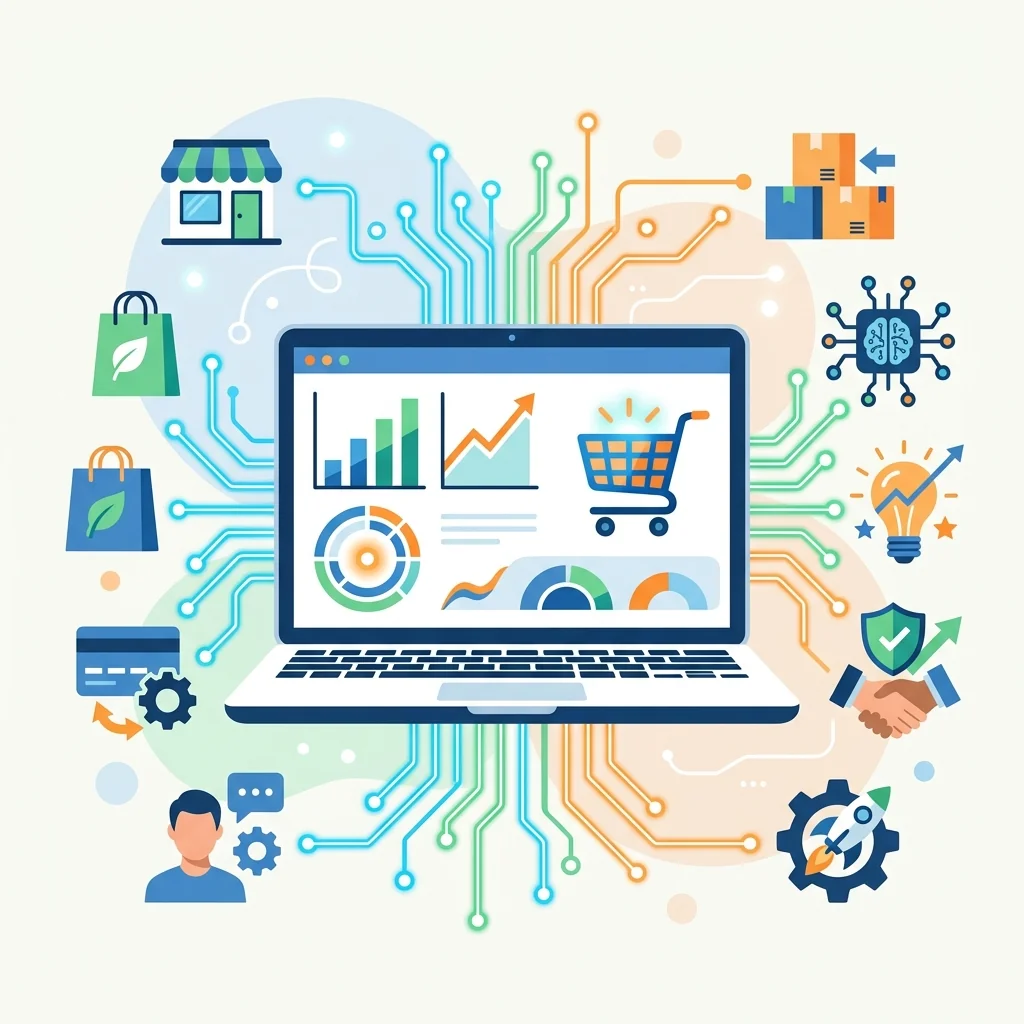
Understanding AI in Online Sales
Artificial Intelligence (AI) is transforming the way online businesses operate, offering powerful tools to boost efficiency and sales. For online business owners and SMEs, integrating AI tools can optimize operations like customer support, personalized marketing, and sales forecasting. Through AI-powered chatbots, businesses can provide 24/7 customer service, answering queries instantly and enhancing customer satisfaction. Additionally, AI can analyze customer behavior and preferences, enabling businesses to create targeted marketing campaigns. This not only increases the likelihood of conversions but also enhances customer retention. By automating repetitive tasks, AI allows business owners to focus on strategy and growth, ultimately driving better results.
To effectively leverage AI to boost online sales, SMEs should evaluate their business needs and choose the right tools. Platforms offering AI-driven product recommendations, such as personalized shopping experiences, can significantly impact sales. Predictive analytics tools help businesses anticipate trends, enabling them to stock popular products and adjust pricing strategies. AI can also improve advertising efforts by analyzing data to target the right audience with relevant ads. For those new to AI, starting small with tools like email marketing automation or inventory management can be beneficial. As businesses grow, more advanced AI-driven tools can be adopted to scale operations. Implementing AI effectively requires a clear understanding of its capabilities and alignment with business goals.
Key Benefits of AI for E-Commerce
Artificial intelligence (AI) offers numerous advantages for e-commerce, particularly in enhancing customer experience and boosting sales. By using AI-driven tools like chatbots and virtual assistants, online business owners can provide instant, personalized support to their customers. These tools can answer common queries, recommend products based on browsing history, and even simulate human interaction, leading to increased customer satisfaction. Additionally, AI can analyze customer data to identify patterns and trends, helping businesses predict future demand and optimize inventory management. This ensures that popular products remain in stock, avoiding potential revenue loss and improving overall operational efficiency.
Another key benefit of leveraging AI in e-commerce is its ability to enhance marketing strategies. AI-powered algorithms can analyze user behavior and segment audiences more effectively, allowing for highly targeted advertising campaigns. For example, businesses can use AI to personalize email marketing content, recommend products on social media, or create dynamic pricing models based on real-time market trends. These approaches not only improve engagement rates but also maximize conversion rates, ultimately boosting sales. By automating repetitive tasks, AI also frees up time for small business owners and SMEs to focus on strategic growth, making it a valuable tool for scaling operations in a competitive market.
Essential AI Tools for Online Businesses
Artificial Intelligence (AI) has revolutionized the way online businesses operate, offering tools that simplify processes and enhance sales. For small to medium-sized enterprises (SMEs), AI-powered chatbots improve customer engagement by providing instant responses to inquiries, helping businesses build trust and streamline communication. Additionally, recommendation engines powered by AI analyze customer behavior and preferences, enabling businesses to offer personalized product suggestions. This not only boosts customer satisfaction but also drives higher sales conversions. AI tools can also optimize digital advertising campaigns by targeting specific audience segments, ensuring that advertisements reach the right people. By analyzing large datasets, AI identifies trends and insights that help businesses make data-driven decisions and stay competitive.
Online business owners can also utilize AI for inventory management and demand forecasting. AI systems predict sales trends, ensuring businesses maintain the right stock levels and reduce overstocking or shortages. Sentiment analysis tools powered by AI allow companies to monitor customer feedback across social media and other platforms, identifying areas for improvement and fostering loyalty. For content creation, AI tools help generate product descriptions, blog posts, and marketing copy efficiently, saving time and resources. Moreover, AI enhances email marketing strategies by personalizing email content and optimizing send times, increasing open rates and engagement. By integrating AI tools into their operations, SMEs can unlock growth opportunities and create a more streamlined and effective sales strategy.
Implementing AI Strategies Effectively
Artificial Intelligence (AI) has become a game-changer for online business owners and SMEs, offering tools to optimize operations and enhance customer experiences. One effective way to leverage AI is by implementing personalized marketing strategies. AI-powered platforms analyze customer data to predict preferences, enabling businesses to deliver tailored product recommendations. For instance, integrating AI tools like chatbots can enhance user engagement by providing instant assistance and guiding customers through the purchase process. Additionally, AI-driven analytics help identify sales trends, optimize pricing, and forecast demand, ensuring more informed decision-making. By strategically utilizing these tools, online businesses can boost customer satisfaction and drive sales growth.
Another impactful strategy is using AI to enhance inventory and supply chain management. Predictive algorithms allow businesses to monitor stock levels in real-time, reducing the risk of overstocking or stockouts. AI can also streamline logistics by optimizing delivery routes, improving efficiency, and lowering operational costs. Furthermore, sentiment analysis tools can monitor customer feedback on social media or reviews to assess brand perception and identify areas for improvement. This data-driven approach allows online businesses and SMEs to stay competitive in fast-changing markets. By adopting AI technologies, entrepreneurs can not only simplify complex processes but also create scalable solutions to sustain long-term growth in online sales.
Measuring Success and Optimizing AI Usage
Measuring success and optimizing AI usage are essential for online business owners and SMEs looking to thrive in today's competitive market. Artificial intelligence provides tools to analyze customer behavior, personalize shopping experiences, and automate marketing efforts. For example, AI-driven algorithms can recommend products based on user preferences, leading to higher conversion rates. Tracking key performance indicators (KPIs) such as sales growth, customer retention, and website traffic helps gauge the effectiveness of AI tools. Regularly evaluating these metrics allows businesses to adjust strategies and ensure continuous improvement. By integrating AI with human expertise, SMEs can create a balanced approach that enhances customer satisfaction and maximizes sales potential.
To effectively leverage AI to boost online sales, businesses should invest in tools tailored to their specific needs. AI-powered chatbots, for instance, can provide 24/7 customer support, addressing inquiries promptly and building trust with potential buyers. Additionally, predictive analytics tools enable businesses to forecast demand, optimize inventory, and prevent stockouts. Content optimization tools powered by AI can enhance product descriptions and marketing campaigns, improving SEO rankings and attracting more visitors. By adopting these technologies, online business owners can streamline operations, save time, and focus on strategic growth efforts. However, it is crucial to ensure data privacy and ethical AI usage, as these factors strengthen consumer trust and foster long-term customer relationships.