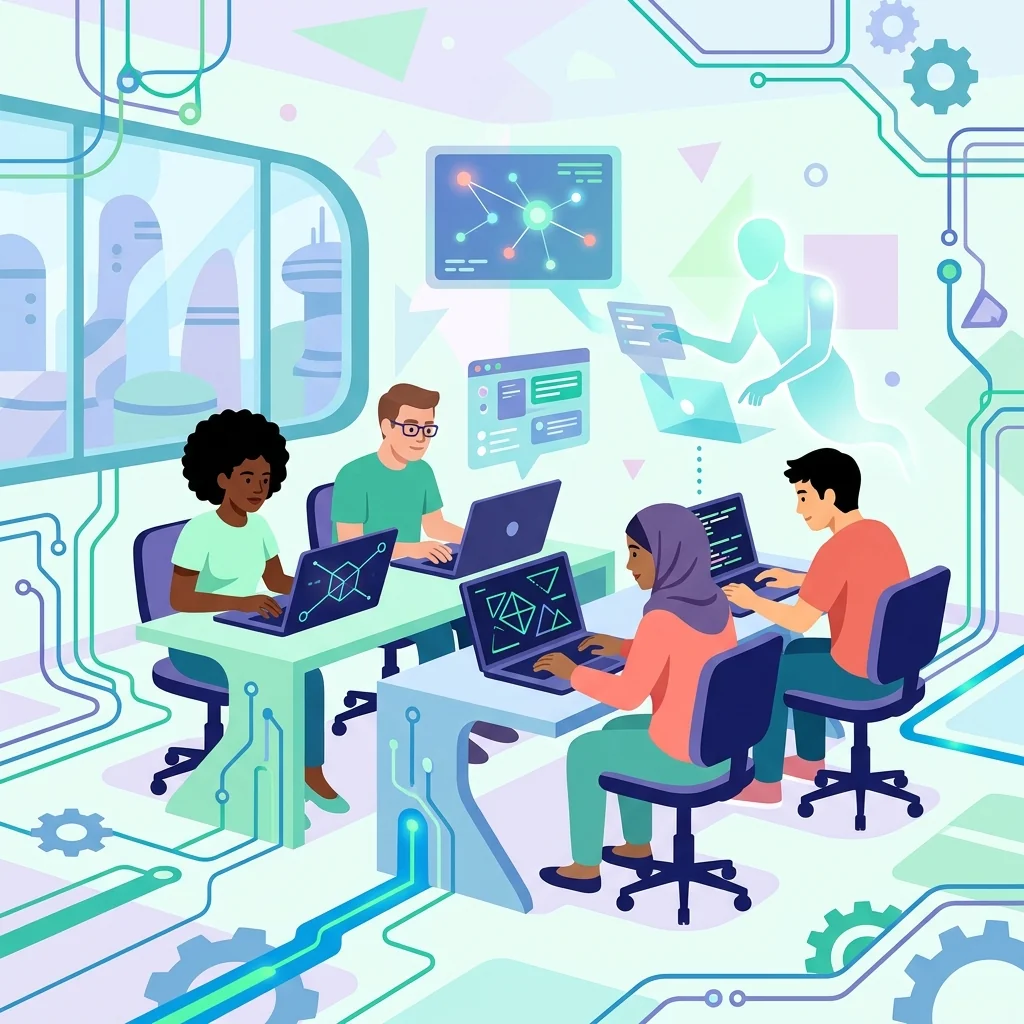
The Future of AI in Coding Education
Artificial Intelligence (AI) is revolutionizing the way coding is taught to students, college learners, and beginner developers. By 2026, AI tools designed to support coding education are expected to become more personalized and adaptive. These tools can analyze learners' progress, pinpoint their weaknesses, and provide tailored solutions to address specific challenges. For instance, AI-powered platforms may offer real-time code debugging, instant feedback, and contextual suggestions, fostering a deeper understanding of programming concepts. Moreover, the integration of natural language processing allows users to interact with these tools conversationally, breaking barriers for those new to coding. Such advancements will enable students and aspiring developers to learn at their own pace, making coding education more inclusive and accessible.
The commercial intent behind AI tools to support coding education in 2026 is evident in their ability to streamline learning processes. With beginner developers in mind, these tools can simplify complex programming tasks through automated code generation and error correction features. Educational institutions may adopt these AI platforms to enhance their curriculum, providing students and learners with hands-on experience in solving real-world problems. Beyond the classroom, AI tools will empower self-taught programmers by offering interactive tutorials and personalized roadmaps. This approach ensures that learners stay motivated and achieve their goals effectively. As the demand for skilled programmers grows, AI-driven educational solutions will play a pivotal role in preparing the next generation of developers.
Benefits of AI Tools for Beginner Developers
AI tools have increasingly become essential for beginner developers navigating the complexities of coding. These tools simplify learning by providing real-time assistance, debugging suggestions, and code generation capabilities. For instance, integrated development environments (IDEs) with AI-powered features can highlight errors, recommend best practices, and even generate code snippets. This makes it easier for students and college learners to focus on understanding logic and structure rather than getting stuck on minor mistakes. Additionally, AI-driven platforms like virtual tutors and interactive coding environments allow learners to practice and receive feedback in a personalized manner. This approach not only accelerates skill-building but also boosts confidence among beginners.
By 2026, AI tools are expected to play an even more integral role in coding education. Advanced algorithms will offer tailored learning paths, adapting to individual student needs and skill levels. Beginner developers will benefit from AI-enhanced collaboration platforms, which facilitate teamwork and simulate real-world coding environments. For instance, these tools can automatically assign tasks based on a user's strengths, ensuring balanced workloads and efficient learning. Moreover, the integration of AI in coding education is likely to reduce barriers to entry by democratizing access to high-quality resources. Students and aspiring developers, regardless of their background or experience, will have the opportunity to learn coding skills effectively and prepare for the demands of the tech industry.
Top AI Platforms for Learning Programming
Artificial intelligence (AI) platforms are transforming how students and beginner developers approach coding education in 2026. These tools provide personalized learning paths, adaptive challenges, and real-time feedback, making programming more accessible than ever. Platforms like CodePilot AI and LearnCodeGPT offer tailored guidance based on user skill levels, ensuring a smoother learning curve for college learners and those new to coding. Additionally, interactive coding environments powered by AI enable hands-on practice with instant debugging assistance, enhancing problem-solving skills. With the growing demand for skilled programmers, these tools are essential for bridging knowledge gaps and making coding education efficient, flexible, and engaging.
AI tools to support coding education in 2026 cater to diverse learning needs while fostering collaboration and innovation. For example, platforms such as AICode Mentor and Syntax Assistant integrate natural language processing (NLP) to explain programming concepts in simple terms, reducing barriers for non-native English speakers. These tools also feature collaborative coding spaces, allowing students and beginner developers to co-create projects and share ideas globally. Furthermore, AI-driven analytics help track individual progress, offering insights to optimize study routines. By leveraging these platforms, learners can build confidence and skill sets needed for modern programming challenges, preparing them for academic and professional success in the evolving tech industry.
Enhancing Personalized Learning with AI
The rapid evolution of artificial intelligence (AI) has paved the way for substantial advancements in education, particularly in coding. By 2026, AI tools will play a central role in making coding education more accessible and tailored to individual learners. These tools can analyze a student's progress, identify specific areas where they struggle, and provide targeted learning resources or exercises. For example, intelligent tutoring systems can simulate one-on-one mentorship, offering real-time feedback and guidance. This personalized approach ensures that students, college learners, and beginner developers receive support tailored to their unique needs, fostering skill development more effectively than traditional methods.
As the demand for coding skills grows globally, AI tools to support coding education in 2026 will cater to diverse learning styles and backgrounds. Interactive platforms powered by AI may offer multilingual support, allowing users to switch between languages such as English and Indonesian seamlessly. This feature is especially beneficial for learners in bilingual regions. Additionally, AI-driven platforms could gamify the learning process, making it engaging and motivating for students. With the integration of AI, coding education becomes less intimidating, encouraging more people to develop programming skills. These innovations will not only empower individual learners but also help bridge the digital skills gap, equipping the next generation of developers with the tools they need to thrive in their careers.
Challenges and Opportunities in 2026
As we approach 2026, the integration of AI tools to support coding education presents both challenges and opportunities. For students, college learners, and beginner developers, AI-powered platforms can simplify complex programming concepts, making learning more accessible and personalized. AI tools can provide real-time feedback, suggest optimized solutions, and adapt to individual learning paces, allowing learners to progress more efficiently. However, challenges persist, such as ensuring the accessibility of these tools across different socioeconomic backgrounds. Additionally, reliance on AI could inadvertently hinder the development of problem-solving skills, as learners may become overly dependent on automated solutions rather than mastering the core principles of coding.
The commercial potential of AI tools in coding education is immense, as educational institutions and technology companies recognize their value in preparing future developers. By 2026, we can expect a growing market for AI-driven coding platforms tailored to diverse learning needs, from gamified environments for beginners to advanced debugging assistants for experienced coders. However, maintaining ethical AI usage and data privacy will be critical, especially when catering to younger audiences. Furthermore, fostering collaboration between educators, developers, and AI providers will be essential to create tools that are both effective and engaging. Striking a balance between automation and hands-on problem-solving will ensure that learners not only acquire technical skills but also develop critical and creative thinking abilities.