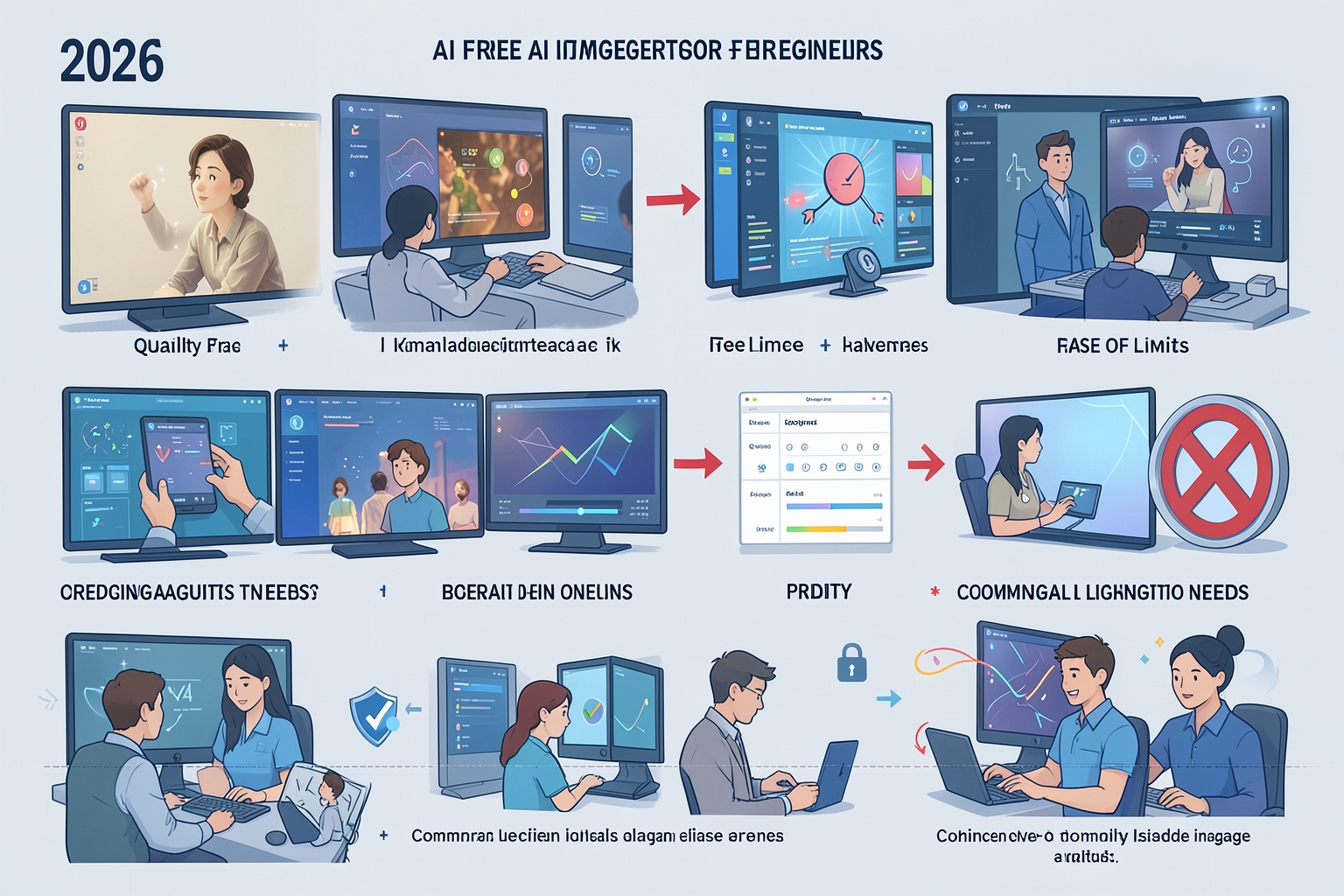
Overview of Free AI Image Generators in 2026
In 2026, free AI image generators have become essential tools for beginners exploring creative possibilities. These platforms offer varying levels of image quality, often leveraging advanced neural networks to produce lifelike visuals. Some prioritize ease of use, with intuitive interfaces and minimal learning curves, making them accessible to those without technical expertise. Free usage limits vary, typically including watermarked outputs or reduced resolutions. Commercial licensing options, however, may require upgrading to premium plans. Privacy concerns are notable — users should verify how platforms manage uploaded content. Beginners should assess whether their chosen generator supports their specific needs, such as style customization or format compatibility.
Choosing the right AI image generator in 2026 involves balancing functionality and limitations. For beginners, platforms with robust tutorials and user-friendly tools are ideal starting points. Consideration of privacy policies is crucial, especially for those uploading sensitive materials. Image quality and style diversity are key differentiators; some generators specialize in photorealism, while others excel in abstract art. Free plans often impose restrictions like non-commercial usage or daily generation caps. Evaluating these factors helps users align tools with their goals. Guides on selecting AI generators, such as those focusing on style, licensing, and privacy, can further aid in making informed decisions tailored to individual requirements.
Evaluating Image Quality for Different Use Cases
Evaluating image quality for different use cases involves several factors, including the specific strengths of each AI image generator. Free AI tools for beginners in 2026 have become increasingly user-friendly, offering intuitive interfaces that simplify the creation process. Quality often varies based on the underlying model, with some tools excelling in photorealism while others shine in artistic styles. Privacy is a crucial consideration; some platforms handle user data locally, while others rely on cloud processing, which could raise concerns. Another critical aspect is the licensing policy, as not all free tools support commercial usage. Beginners should prioritize their primary goal, whether it's producing images for personal projects, social media content, or business purposes. This tailored approach ensures the chosen AI generator aligns with both creative needs and ethical considerations.
Ease of use and feature availability often define the appeal of AI image generators for newcomers. Many free options offer limited-generation quotas, making understanding these restrictions vital to avoid interruptions. Some platforms provide built-in customization tools, allowing users to refine outputs directly, while others rely on external editing software. Choosing the right generator also means assessing the quality of support, such as tutorials or user communities that can help resolve challenges. Privacy policies should be reviewed to ensure data security aligns with user expectations, especially for sensitive projects. By balancing these elements with the specific style and use-case requirements, beginners can navigate the growing landscape effectively. For more detailed guidance, explore resources that compare AI image generators comprehensively and provide insights into selecting the best option for diverse creative goals.
Ease of Use: User-Friendly Features Compared
Ease of use varies significantly among free AI image generators for beginners in 2026. Simple interfaces dominate this space, with drag-and-drop or minimal input fields enabling fast outputs. Many tools offer guided workflows, ensuring users can create without prior design experience. Quality of output also depends on the tool's AI model sophistication. Some generators excel at realistic details, while others are favored for stylized or abstract results. Free limits often restrict daily usage or resolution, but they remain adequate for non-commercial projects. Tools that offer commercial-use licenses are rare in free tiers, making them particularly valuable for creators intending to monetize their work.
Privacy and data security concerns are critical when choosing an AI image generator. Most tools require uploading personal prompts, and their data handling policies vary widely. Beginners should prioritize platforms with transparent privacy terms, ensuring uploaded content and generated images aren't used for model training without consent. Choosing the right generator depends on intended usage, such as quick prototyping, portfolio building, or commercial publishing. Guides comparing AI image tools, like those in the AI Image category, help users evaluate options. Keywords like "ai image generator beginner-friendly" lead to resources explaining essential features and limitations. Matching tools to needs ensures optimal results, balancing usability, quality, and ethical considerations.
Understanding Free Limits and Commercial Licensing
Free AI image generators are excellent for beginners exploring creative possibilities. Key factors for comparison include image quality, ease of use, free usage limits, licensing, and privacy. Popular options in 2026 offer remarkable advancements in generating photorealistic or stylized images. Usability is often enhanced with intuitive interfaces and minimal setup. However, free limits vary, with some platforms restricting daily image counts or resolution. Always check whether generated images can be used commercially under the free plan, as terms differ significantly. Privacy is another critical aspect; some generators allow private projects, while others may store or share user-generated content. Thoroughly reviewing these aspects ensures the right tool aligns with both creative and practical needs.
Choosing the best AI image generator depends on your goals and constraints. For personal projects or experimentation, prioritize platforms with generous free tiers and simple workflows. If commercial use is important, verify licensing terms carefully; some tools offer royalty-free usage, while others require paid upgrades. Evaluate privacy policies to ensure sensitive data remains secure. Comparing user reviews and sample outputs can also help assess image quality and style versatility. Beginners might benefit from tools with tutorials or active community forums. For more detailed guidance, consult resources like our guide to choosing the right AI image generator. Ultimately, selecting a generator tailored to your specific requirements maximizes creative potential while avoiding unnecessary limitations.
How to Choose the Right AI Image Generator
Choosing the right AI image generator depends on several factors, including image quality, ease of use, free tier limits, commercial licensing, and privacy features. Evaluate image quality by comparing output sharpness, detail, and style alignment. Generators like those based on GANs or diffusion models often produce realistic or creative results. For beginners, focus on tools with intuitive interfaces or guided workflows. Free tiers vary; check if the limits meet your project needs without compromising quality. Commercial licensing is critical for business use. Prioritize platforms clearly stating usage rights to avoid legal issues. Privacy is also essential; ensure the service doesn’t misuse uploaded data. Balance these aspects to find a generator that matches your goals.
Start by identifying your purpose — artistic projects, content creation, or professional use. If privacy matters, choose tools offering on-device processing or strict data policies. For commercial projects, verify licensing explicitly supports business use. Compare user interfaces; drag-and-drop or template systems suit beginners. Investigate free-tier constraints, like watermarked images or limited resolutions. Some AI generators excel in specific styles, such as photorealism or abstract art. Experiment with multiple tools to assess their strengths and weaknesses. Refer to detailed guides on choosing AI image generators for deeper insights. This ensures an informed decision based on your unique needs.